Astromodification optimizes the camera’s factory-installed filter, allowing it to capture more of the previously restricted wavelengths, especially the H-alpha (Hydrogen-alpha) red emission line that is essential for nebula imaging.


Dreamsky Astrolab
The Idea Behind Astromodification
What is Astromodification?
When it comes to astrophotography—whether astroscape or deep-sky imaging—many enthusiasts eventually encounter the concept of “astromodification.” As they delve deeper into the field, they also come across specialized terms related to monochrome and color astronomy cameras, as well as narrowband filter systems, such as LRGB, Narrowband, and Dual Narrowband imaging.
These CMOS astronomy sensor technologies and filter systems, specifically designed for astrophotography, are essential components of modern astronomical imaging. They significantly enhance sensitivity to specific wavelengths, enabling astrophotographers to capture hidden nebular structures, cosmic colors, and faint celestial details that are otherwise invisible to the naked eye.
So why do we need astromodification?
In simple terms, astromodification optimizes the camera’s stock UV/IR cut filter, allowing it to capture more wavelengths that are normally blocked—especially the H-alpha (Hydrogen-alpha) red emission line, which is essential for nebula imaging. Since stock UV/IR cut filters are designed for standard daytime color balance, they reduce this red signal, resulting in the loss of many faint nebular details.
With professional DreamSky BCF astromodification, cameras significantly enhance sensitivity to nebulae, the Milky Way, and deep-sky objects, delivering richer color depth, stronger nebular signals, and improved shadow details. This is also why many professional astrophotographers choose astromodification for deep-sky imaging. Today, let’s take a closer look at the principles behind astromodification and how it redefines the way you see the universe.

Spectrum and Camera
In astrophotography, our imaging targets are very different from those in general photography. Astroscape photography typically uses a wide field of view to capture the Milky Way, constellations, and night sky landscapes, while deep-sky astrophotography focuses on smaller field targets such as nebulae, galaxies, and star clusters.
Although we can see visible light with our eyes, it is just one small part of the electromagnetic spectrum. Infrared, ultraviolet, radio waves, and even X-rays are fundamentally the same in nature—they are all forms of electromagnetic radiation, differing only in wavelength. These different wavelengths determine their unique properties and their roles in astronomical observation and astrophotography.


UV/IR Cut Filter
Ensures accurate colors and sharp image quality.
Ensures accurate colors and sharp image quality.
Whether in DSLRs, mirrorless cameras, or even today’s advanced smartphones, the core imaging sensor is typically a CMOS sensor. In fact, CMOS sensors are sensitive to a much broader range of wavelengths than the human eye can perceive, including ultraviolet (UV) and infrared (IR) light.
However, these additional wavelengths are not part of the visible spectrum seen by the human eye. If allowed to reach the sensor, they can cause color shifts, inaccurate color reproduction, and reduced image sharpness. To overcome this, camera manufacturers incorporate UV/IR cut filters into the optical system, ensuring more natural colors and images that closely match what we see with our own eyes.
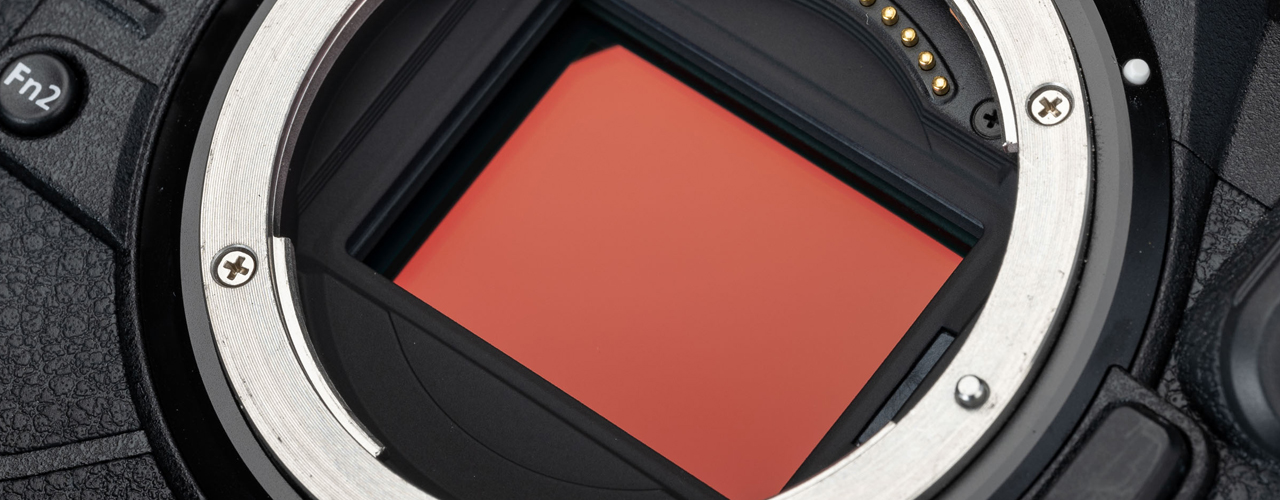
Digital cameras are designed primarily for daytime and general photography, they are equipped with a UV/IR cut filter positioned in front of the CMOS sensor. This filter blocks ultraviolet and infrared light while allowing only visible light to reach the sensor, helping to maintain accurate colors, natural white balance, and sharp image quality.
However, the UV/IR cut filter found in most stock cameras does more than simply block infrared light. It also reduces transmission of deep red wavelengths near the infrared region. One of the most important of these is the H-alpha (Ha) emission line at 656.3nm, which is a key wavelength for nebula imaging.
Cameras such as the Nikon D750, the factory filter has very low transmission at this wavelength, blocking more than 90% of the incoming H-alpha light before it can reach the sensor. As a result, much of the nebular signal is lost, making emission nebulae appear significantly fainter than they actually are.
For general photography, this has little impact since most subjects do not emit significant light at these wavelengths. However, in astrophotography—especially nebula imaging—many important signals are concentrated in the deep red region, including:
• H-alpha (Ha) — 656.3nm
• Sulfur II (SII) — 672nm
These wavelengths contain much of the color and detail found in emission nebulae, making them essential for deep-sky astrophotography.
Stock UV/IR cut filters typically reduce the transmission of these key wavelengths to as low as 20%–30%, or even less. As a result, a large portion of valuable nebular signal is lost before it ever reaches the sensor.This means that when using an unmodified stock camera for deep-sky imaging, photographers often need significantly longer exposures and more stacking to gather enough light for faint nebular structures to appear. This is one of the key reasons why astromodification has become so important in modern astrophotography.


DreamSky AstroLab Astromodification Services