
Dreamsky Astrolab
Custom BCF Astro Filters for Astromod
DREAMSKY BCF PRO Filter
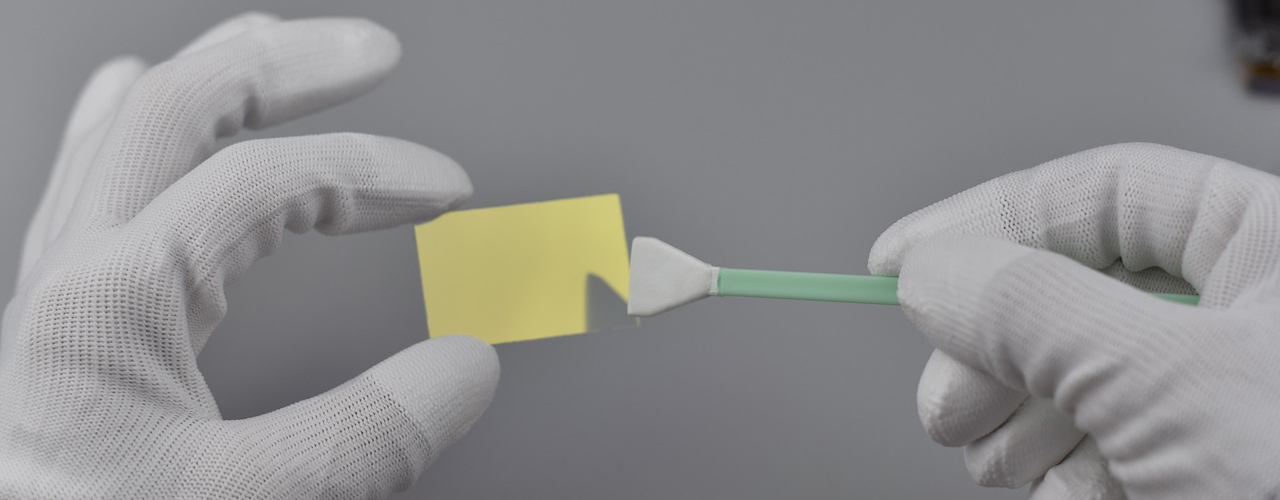
DreamSky astromodification uses the dedicated DREAMSKY BCF Filter series for replacement. In addition to the standard version, a higher-end DREAMSKY BCF Pro version is also available, offering advanced specifications such as F11–F16 cleanroom-grade production with zero dust and zero defects, as well as an ultra-optimized version designed for improved star shapes and reduced halos.Since the BCF astronomy filter must be installed in front of the sensor, the original factory UV/IR cut filter must first be removed before the replacement and installation process can be carried out.
The factory UV/IR cut filter in most cameras is designed primarily to ensure accurate color reproduction for general photography. However, its transmission within the visible spectrum is not always optimal, with some attenuation occurring in certain wavelength ranges, particularly near the deep-red region that is important for astrophotography. In addition, cameras equipped with a low-pass filter may experience a slight reduction in image sharpness and fine-detail resolution, which is less desirable for nightscape and deep-sky imaging.
By comparison, a BCF astronomy filter effectively blocks infrared light above 700nm and ultraviolet light below 400nm, while maintaining higher transmission across the visible spectrum (400–700nm). This significantly improves light-gathering efficiency for both nightscape and deep-sky astrophotography. For everyday photography, natural color balance can be restored through a custom white balance setting.


The H-alpha (Ha) emission line at 656.3nm is one of the most important wavelengths in astrophotography. Many emission nebulae glow brightly in H-alpha as hydrogen atoms, excited by high-energy radiation, release light at this specific wavelength when they return to a lower energy state.In deep-sky imaging, H-alpha reveals the most active and densely ionized regions of a nebula, making it a key wavelength for capturing nebular structure, fine detail, and stellar nurseries. While a stock camera filter typically transmits only around 25% of H-alpha light, a professionally astromodified camera can achieve transmission rates of up to 98%, significantly improving imaging efficiency and nebular detail.
In addition, because ultraviolet, visible, and infrared light have different refractive properties, the DreamSky BCF Pro UV/IR cut filter helps minimize star bloat and halo effects caused by out-of-focus wavelengths. The result is tighter, sharper star profiles and cleaner overall image quality.
At DreamSky, we exclusively use premium custom astronomy filters from internationally trusted manufacturers, combining exceptional optical quality, advanced coatings, and precise spectral transmission to deliver the highest standards in astrophotography performance.


Starhunter astromodification utilizes industry-leading custom astronomy filter solutions, specifically optimized for nightscape and deep-sky imaging. Featuring professional-grade optical coatings, high-transmission design, and exceptional filter cleanliness, these filters significantly enhance the capture of nebular and deep-sky signals while maintaining superior image quality.We are committed to providing astrophotographers with professional astromodification filter solutions that deliver outstanding performance, quality, and reliability.

Unlock the Hidden Colors of the Universe

Up to 98% H-alpha (Ha) Transmission

Minimizes Star Bloat and Halo Effects
Types of Astromodification
There are several common types of astromodification available today, each optimized for specific imaging needs and astrophotography applications.
1. BCF Astromodification
This solution replaces the stock camera UV/IR cut filter with a BCF astronomy filter that closely matches the original optical thickness, ensuring the camera’s flange focal distance remains essentially unchanged after modification. It offers several key advantages:
- Stable flange distance with no need to recalibrate lens focusing.
- Effective blocking of UV and IR wavelengths, reducing chromatic issues caused by ultraviolet light.
- Minimizes star bloat in long exposures caused by refractive differences across wavelengths.
- Improves star sharpness and overall image clarity.
- Provides additional dust protection for the CMOS sensor.
- Currently the most widely adopted astromodification solution among astrophotography enthusiasts.
- Since the working spectrum remains within the visible light range, normal photography is still possible, with color balance easily restored through white balance adjustment or post-processing.

2. L-Pro Astromodification

3. Full Spectrum (Full-Spectrum Modification)
This modification removes the camera’s original UV/IR cut filter entirely, allowing the sensor to capture a much wider range of wavelengths, including ultraviolet (UV), visible light, and near-infrared (IR).
- Extends sensitivity to the full spectrum, including ultraviolet and infrared
- CMOS sensor becomes more exposed and more susceptible to dust contamination
- Requires external UV/IR cut filters for normal photography use
- More prone to star bloat and chromatic issues during long exposures
- Potential impact on optical balance and flange focal performance
- Generally not recommended unless for specialized scientific or experimental applications
- This configuration is typically reserved for advanced users with specific research or experimental imaging requirements.

4. TEC Cooled Astromodification
This modification integrates a TEC (Thermoelectric Cooling) system to actively reduce the camera sensor’s operating temperature, significantly improving long-exposure astrophotography performance.
Key advantages include:
- Effectively reduces thermal noise for cleaner long-exposure images.
- Reduces dark current, lowering noise and fixed-pattern artifacts in extended exposures, while improving shadow detail.
- Produces more stable long-exposure performance with lower background noise and greater flexibility in post-processing.
- Offers improved heat management and low-noise performance, delivering results closer to dedicated cooled CMOS astronomy cameras.
- Enhances stability in high-temperature environments, effectively reducing thermal and color noise issues.
- Well-suited for narrowband and deep-sky astrophotography, improving data quality for nebulae and faint celestial objects.
DreamSky AstroLab Astromodification Services